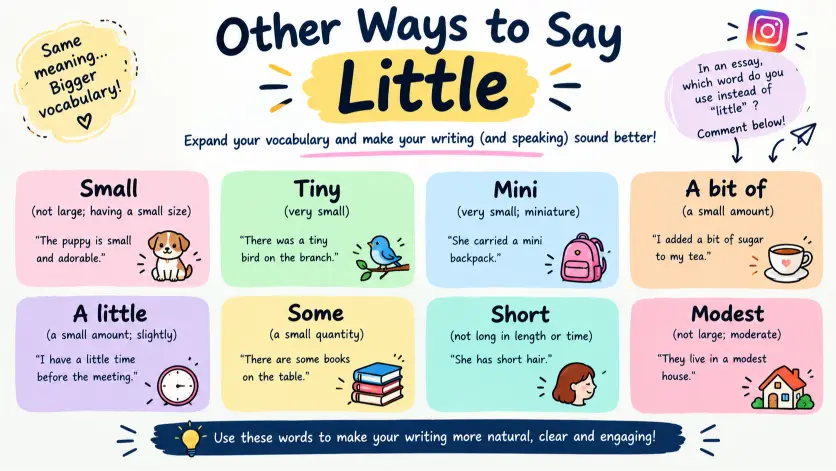
Have you ever used the phrase “I will try my best” in an essay and wondered whether there is a more professional way to express your determination? Although this expression is common in everyday English, it may sound vague or repetitive in academic and formal writing. Choosing more precise alternatives can help you communicate confidence, responsibility, and commitment while making your sentences clearer and more engaging. For you are writing a school assignment, a college essay, or a professional statement, the right words can strengthen your message.
In this guide, you will discover 20 useful alternatives to “I will try my best,” complete with meanings, natural example sentences, and practical usage tips. These expressions will help English learners expand their vocabulary and improve their writing style. Drawing on established English usage principles, this guide distinguishes between formal, academic, and conversational phrases so you can choose language that fits your purpose. Learn how to express effort more effectively, avoid repetitive wording, and make your essays sound polished, natural, and confident.
Quick Categories: Choose the Right Alternative
Formal alternatives to “little”
- Minimal: A very small amount or degree.
- Marginal: A small difference or change.
- Limited: Restricted in amount or extent.
- Negligible: So small that it has little practical importance.
Pro Tip: Use precise terms such as “minimal” and “negligible” in reports, research, and formal writing. Choose the word that accurately reflects the size or importance of the amount.
Casual alternatives
- Small: Not large in size.
- Tiny: Extremely small.
- A bit: A small amount or degree.
- A little bit: A small amount, often used in conversation.
Pro Tip: “Small” and “a bit” are natural in everyday conversation. Use “tiny” when you want to emphasize that something is especially small.
Professional alternatives
- Modest: Relatively small but reasonable.
- Slight: Small in degree or intensity.
- Marginal: Small or limited in effect.
- Minor: Not serious or significant.
Pro Tip: In professional communication, replace vague descriptions with specific measurements whenever possible. For example, “a slight increase” is useful, but “a 2% increase” is more precise when the data is available.
Informal expressions
- A touch: A small amount, often of an ingredient or quality.
- A tad: A slightly informal way to say “a little.”
- A smidge: A very small amount.
- A wee bit: A small amount, particularly in some British and Scottish varieties of English.
Pro Tip: These informal expressions work well in friendly conversations. Avoid them in formal reports or important business documents unless the tone intentionally calls for informality.
“Better vocabulary is not about using bigger words. It is about choosing the most accurate word for the situation.”
What Does “Little” Mean?
“Little” generally means small in size, amount, degree, or importance. It can also describe a young person, such as “a little boy,” or communicate affection, as in “my little sister.”
Grammar explanation
“Little” is commonly used as a determiner, adjective, or pronoun, depending on the sentence.
- With uncountable nouns: There is little water left.
- With a noun describing size: They live in a little house.
- With a person or affectionate reference: Her little brother is five.
- With an adjective or adverb: The room is a little warmer today.
A useful distinction is that little often suggests a small amount, sometimes an insufficient amount, while a little usually suggests that some amount exists.
- “We have little time.” This suggests that time is insufficient.
- “We have a little time.” This suggests that some time is available.
When to Use “Little”
Choose an alternative based on what you want to describe.
- Physical size: Use small, tiny, miniature, or compact.
- Amount: Use a bit, a small amount, or a limited quantity.
- Degree or intensity: Use slightly, marginally, or somewhat.
- Importance: Use minor, insignificant, or negligible.
- Money or resources: Use modest, limited, or minimal.
- Young age or affection: Use young, small, or a suitable affectionate expression.
Spoken vs. written English
| Context | Suitable expressions |
| Everyday conversation | Small, tiny, a bit |
| Academic writing | Minimal, marginal, negligible |
| Business emails | Slight, limited, modest |
| Creative writing | Petite, miniature, diminutive |
| Friendly conversations | A tad, a touch, a smidge |
“The best synonym depends on whether you mean size, quantity, degree, or importance.”
Is It Professional or Polite to Say “Little”?
Polite? Yes, in most everyday contexts.
Professional? Yes, when it accurately describes the situation, although more precise alternatives may improve formal writing.
The word itself is not unprofessional. However, expressions such as “a little problem” can sometimes make a serious issue sound less important than it is.
Business example:
“Could you make a slight adjustment to the report before the meeting?”
This sounds specific and professional when the requested change is genuinely small.
Pros and Cons of Using “Little”
Pros
- Simple and natural: Easy for English learners to understand and use.
- Friendly tone: Can make requests sound gentle.
- Common usage: Works in everyday spoken and written English.
- Easy to understand: Communicates small size or quantity without complex vocabulary.
Cons
- Too vague for some work contexts: It may not explain the actual amount or scale.
- Can be overused: Repeating it makes writing less varied.
- Limited emotional range: It may not express the intended degree of importance.
- Not always suitable for formal writing: Technical or academic contexts may require more precise wording.
Other Ways to Say Little: 30 Examples
The following alternatives will help you sound more fluent, confident, and natural in different situations. Use each expression according to its meaning, tone, and audience. These words can describe small quantities, physical objects, minor changes, or degrees of intensity. Some are also useful professional reaction phrases when responding to small improvements or limited changes.
1. Phrase: Small
Meaning: Not large in size, amount, or scale.
Explanation: “Small” is one of the most versatile and neutral alternatives.
Example Sentence: We moved into a small apartment near the office.
Best Use: Everyday descriptions
Worst Use: Exact measurements
Tone: Neutral, clear, versatile
Context Variability: Casual: “It’s a small bag.” Professional: “We operate from a small regional office.” Spoken: “I bought a small gift.”
2. Phrase: Tiny
Meaning: Extremely small in size or amount.
Explanation: Use “tiny” when something is noticeably smaller than expected.
Example Sentence: There is a tiny error in the final paragraph.
Best Use: Very small objects
Worst Use: Large quantities
Tone: Descriptive, emphatic, friendly
Context Variability: Casual: “That’s a tiny kitten.” Professional: “A tiny formatting error remains.” Spoken: “Just a tiny piece, please.”
3. Phrase: Slight
Meaning: Small in degree, intensity, or extent.
Explanation: “Slight” is especially useful for describing subtle changes or differences.
Example Sentence: We noticed a slight improvement in customer satisfaction.
Best Use: Minor changes
Worst Use: Physical size emphasis
Tone: Neutral, measured, professional
Context Variability: Casual: “There’s a slight difference.” Professional: “The figures show a slight increase.” Spoken: “I feel a slight headache.”
4. Phrase: Minimal
Meaning: The smallest amount or degree necessary or present.
Explanation: “Minimal” emphasizes that something is very limited.
Example Sentence: The project requires minimal supervision.
Best Use: Resources, effort
Worst Use: Emotional affection
Tone: Formal, precise, objective
Context Variability: Casual: “It takes minimal effort.” Professional: “The process requires minimal intervention.” Spoken: “We made minimal changes.”
5. Phrase: Limited
Meaning: Restricted in amount, availability, or extent.
Explanation: Use “limited” when something is available only in a small quantity or scope.
Example Sentence: We have limited time to complete the presentation.
Best Use: Time, resources
Worst Use: Physical dimensions
Tone: Neutral, practical, formal
Context Variability: Casual: “I have limited space.” Professional: “Funding remains limited.” Spoken: “We have limited options.”
6. Phrase: Modest
Meaning: Relatively small in size, amount, or ambition.
Explanation: “Modest” often describes a reasonable or moderate amount without suggesting that it is inadequate.
Example Sentence: The company achieved a modest increase in revenue.
Best Use: Gains, budgets
Worst Use: Tiny objects
Tone: Professional, restrained, positive
Context Variability: Casual: “It’s a modest home.” Professional: “We expect modest growth.” Spoken: “She received a modest raise.”
7. Phrase: Minor
Meaning: Small in importance, seriousness, or extent.
Explanation: “Minor” is appropriate when something is not a major issue.
Example Sentence: Only minor revisions are needed before publication.
Best Use: Small problems
Worst Use: Serious concerns
Tone: Neutral, factual, professional
Context Variability: Casual: “It’s a minor issue.” Professional: “The report contains minor inconsistencies.” Spoken: “I had a minor accident.”
8. Phrase: Negligible
Meaning: So small or unimportant that it can reasonably be disregarded.
Explanation: This formal word is useful when an amount or effect is extremely insignificant in context.
Example Sentence: The additional cost was negligible compared with the overall budget.
Best Use: Data, costs
Worst Use: Major impacts
Tone: Formal, analytical, precise
Context Variability: Casual: “The difference is negligible.” Professional: “The risk appears negligible.” Spoken: “The extra charge was negligible.”
9. Phrase: Marginal
Meaning: Small or limited in degree, effect, or significance.
Explanation: “Marginal” often describes small changes, benefits, or differences.
Example Sentence: The revised strategy produced marginal gains in productivity.
Best Use: Performance changes
Worst Use: Affectionate descriptions
Tone: Analytical, formal, measured
Context Variability: Casual: “There was a marginal difference.” Professional: “The policy delivered marginal benefits.” Spoken: “Sales improved marginally.”
10. Phrase: Petite
Meaning: Small and delicately proportioned, especially when describing a person or object.
Explanation: “Petite” is often used in fashion and descriptions of physical stature.
Example Sentence: The boutique offers petite sizes for shorter customers.
Best Use: Fashion, stature
Worst Use: Amounts of time
Tone: Descriptive, refined, neutral
Context Variability: Casual: “She has a petite frame.” Professional: “The collection includes petite clothing.” Spoken: “That petite handbag is lovely.”
11. Phrase: Miniature
Meaning: Much smaller than the usual or original version.
Explanation: “Miniature” often describes a small-scale replica or model.
Example Sentence: The museum displayed a miniature model of the historic building.
Best Use: Models, replicas
Worst Use: Abstract quantities
Tone: Descriptive, specific, neutral
Context Variability: Casual: “He collects miniature cars.” Professional: “The team created a miniature prototype.” Spoken: “Look at that miniature train.”
12. Phrase: Compact
Meaning: Small and efficiently arranged without unnecessary space.
Explanation: “Compact” is especially useful for products, furniture, and spaces designed to save room.
Example Sentence: We purchased a compact printer for the home office.
Best Use: Space saving
Worst Use: Emotional intensity
Tone: Practical, descriptive, positive
Context Variability: Casual: “It’s a compact camera.” Professional: “The office uses a compact workstation design.” Spoken: “I need a compact suitcase.”
13. Phrase: Diminutive
Meaning: Small in size or stature.
Explanation: “Diminutive” is a more literary alternative that emphasizes small physical dimensions.
Example Sentence: The diminutive cottage stood beside the lake.
Best Use: Literary descriptions
Worst Use: Routine business emails
Tone: Literary, descriptive, formal
Context Variability: Casual: “A diminutive dog followed us.” Professional: “The report describes a diminutive structure.” Spoken: “It was a diminutive figure in the distance.”
14. Phrase: Petite in size
Meaning: Small in physical dimensions or stature.
Explanation: This expression clarifies that you are discussing physical size rather than amount.
Example Sentence: The designer created a petite in size accessory for the collection.
Best Use: Size clarification
Worst Use: Natural concise writing
Tone: Descriptive, neutral, specific
Context Variability: Casual: “It’s petite in size.” Professional: “The product is petite in size and easy to store.” Spoken: “We need something petite in size.”
15. Phrase: A bit
Meaning: A small amount or degree.
Explanation: “A bit” is a common conversational expression, particularly before adjectives and adverbs.
Example Sentence: The instructions are a bit confusing.
Best Use: Casual conversation
Worst Use: Highly formal reports
Tone: Relaxed, conversational, friendly
Context Variability: Casual: “I’m a bit tired.” Professional: “The timeline is a bit tight.” Spoken: “Could you wait a bit?”
16. Phrase: A little bit
Meaning: A small amount or degree.
Explanation: This expression is natural in conversation and can soften a statement or request.
Example Sentence: Could you speak a little bit more slowly?
Best Use: Gentle requests
Worst Use: Concise technical writing
Tone: Friendly, gentle, conversational
Context Variability: Casual: “I’m a little bit hungry.” Professional: “The document needs a little bit more detail.” Spoken: “Move it a little bit closer.”
17. Phrase: A touch
Meaning: A small amount of something.
Explanation: “A touch” often describes a small quantity of an ingredient or a subtle quality.
Example Sentence: Add a touch of lemon juice to the sauce.
Best Use: Small additions
Worst Use: Exact data reporting
Tone: Refined, conversational, subtle
Context Variability: Casual: “It’s a touch cold.” Professional: “The presentation needs a touch more clarity.” Spoken: “Add a touch of salt.”
18. Phrase: A tad
Meaning: A slightly small amount or degree.
Explanation: “A tad” is informal and often used to make observations sound light or understated.
Example Sentence: The room is a tad warmer than I expected.
Best Use: Friendly observations
Worst Use: Formal documentation
Tone: Informal, light, understated
Context Variability: Casual: “I’m a tad nervous.” Professional: “The deadline seems a tad ambitious.” Spoken: “That bag is a tad heavy.”
19. Phrase: A smidge
Meaning: A very small amount.
Explanation: “A smidge” is a highly informal expression often used for tiny quantities.
Example Sentence: Add a smidge of pepper to the soup.
Best Use: Casual quantities
Worst Use: Formal reports
Tone: Playful, informal, friendly
Context Variability: Casual: “I need a smidge more room.” Professional: “The design could use a smidge more contrast.” Spoken: “Just a smidge, please.”
20. Phrase: A wee bit
Meaning: A small amount or degree.
Explanation: This expression is associated particularly with Scottish and some British English usage.
Example Sentence: The walk was a wee bit longer than expected.
Best Use: Friendly conversation
Worst Use: Formal academic prose
Tone: Informal, warm, regional
Context Variability: Casual: “I’m a wee bit tired.” Professional: “The schedule is a wee bit tight.” Spoken: “Wait a wee bit longer.”
21. Phrase: Slightly
Meaning: To a small degree.
Explanation: “Slightly” is an adverb used to modify adjectives, verbs, and comparative expressions.
Example Sentence: Please move the meeting slightly earlier.
Best Use: Subtle adjustments
Worst Use: Describing objects alone
Tone: Neutral, precise, professional
Context Variability: Casual: “It’s slightly cold.” Professional: “Costs increased slightly.” Spoken: “Could you turn it slightly?”
22. Phrase: Somewhat
Meaning: To some degree, but not completely or greatly.
Explanation: “Somewhat” is useful when a change or quality is noticeable but limited.
Example Sentence: The revised proposal is somewhat clearer.
Best Use: Qualified assessments
Worst Use: Exact quantities
Tone: Measured, neutral, formal
Context Variability: Casual: “I’m somewhat tired.” Professional: “The findings are somewhat inconclusive.” Spoken: “That sounds somewhat unusual.”
23. Phrase: Scant
Meaning: Barely sufficient or available in very small amounts.
Explanation: “Scant” often suggests that there is less of something than is needed or expected.
Example Sentence: The team had scant information about the incident.
Best Use: Insufficient resources
Worst Use: Positive abundance
Tone: Formal, critical, concise
Context Variability: Casual: “We had scant time.” Professional: “The investigation found scant evidence.” Spoken: “There was scant support for the idea.”
24. Phrase: Sparse
Meaning: Thinly distributed or present in small numbers.
Explanation: “Sparse” is appropriate for describing limited amounts spread across an area or category.
Example Sentence: The report contains sparse details about the proposed changes.
Best Use: Limited distribution
Worst Use: A single small object
Tone: Neutral, descriptive, analytical
Context Variability: Casual: “The trees are sparse here.” Professional: “The dataset contains sparse observations.” Spoken: “Attendance was sparse.”
25. Phrase: Insignificant
Meaning: Too small or unimportant to have much effect.
Explanation: Use “insignificant” when the emphasis is on importance or impact rather than physical size.
Example Sentence: The difference between the two estimates was insignificant.
Best Use: Impact assessments
Worst Use: Emotionally important matters
Tone: Formal, analytical, objective
Context Variability: Casual: “It’s an insignificant difference.” Professional: “The effect was statistically insignificant.” Spoken: “The delay was insignificant.”
26. Phrase: Inconsequential
Meaning: Having little or no meaningful effect or importance.
Explanation: This formal word describes something that does not significantly influence an outcome.
Example Sentence: The formatting issue was inconsequential to the final decision.
Best Use: Minor consequences
Worst Use: Serious outcomes
Tone: Formal, analytical, detached
Context Variability: Casual: “The mistake was inconsequential.” Professional: “The variation was inconsequential to the results.” Spoken: “It was an inconsequential detail.”
27. Phrase: Insufficient
Meaning: Not enough for a particular purpose.
Explanation: “Insufficient” is more accurate than “little” when you need to emphasize that an amount does not meet a requirement.
Example Sentence: We have insufficient evidence to support the claim.
Best Use: Requirements, resources
Worst Use: Describing small size
Tone: Formal, direct, precise
Context Variability: Casual: “There’s insufficient space.” Professional: “The available funding is insufficient.” Spoken: “We have insufficient time to finish.”
28. Phrase: Meager
Meaning: Smaller or less plentiful than what is needed or expected.
Explanation: “Meager” often suggests an unsatisfactory amount of food, income, resources, or support.
Example Sentence: The organization operated on a meager budget.
Best Use: Limited resources
Worst Use: Adequate supplies
Tone: Critical, descriptive, formal
Context Variability: Casual: “The meal was meager.” Professional: “The project received meager funding.” Spoken: “They earned a meager income.”
29. Phrase: Modicum
Meaning: A small quantity of something, especially an abstract quality.
Explanation: “Modicum” often appears in expressions such as “a modicum of respect” or “a modicum of patience.”
Example Sentence: Every successful negotiation requires a modicum of trust.
Best Use: Abstract qualities
Worst Use: Everyday size descriptions
Tone: Formal, refined, precise
Context Variability: Casual: “Show a modicum of patience.” Professional: “The proposal requires a modicum of flexibility.” Spoken: “We need a modicum of cooperation.”
30. Phrase: Scanty
Meaning: Available in an amount that is too small or inadequate.
Explanation: “Scanty” often describes limited information, clothing, supplies, or evidence, and can imply inadequacy.
Example Sentence: The researchers had scanty information about the event.
Best Use: Inadequate information
Worst Use: Abundant resources
Tone: Descriptive, critical, formal
Context Variability: Casual: “The details were scanty.” Professional: “The available documentation was scanty.” Spoken: “We received scanty information.”
Common Mistakes When Using “Little”
English learners sometimes use “little” and its alternatives interchangeably, even when the meanings are different. Here are five mistakes to avoid.
1. Confusing “little” with “few.” Incorrect: I have little books. Correct: I have few books.
Use “few” with plural countable nouns and “little” with uncountable nouns when referring to quantity.
2. Confusing “little” with “a little.” Incorrect meaning: We have little time, but we can finish comfortably. Better: We have a little time, so we can finish comfortably.
“Little time” often suggests a shortage, while “a little time” emphasizes that some time is available.
3. Using “tiny” for every small quantity. Awkward: I have tiny patience today. Better: I have very little patience today.
“Tiny” usually emphasizes physical size, although it can describe other quantities in suitable contexts.
4. Using informal expressions in formal writing. Informal: The results improved a tad. Professional: The results improved slightly.
Choose vocabulary that matches the audience and purpose.
5. Using “negligible” when something matters. Incorrect: The patient’s symptoms are negligible. Better: The symptoms are mild, if that accurately reflects their severity.
Do not describe something as negligible unless its significance is genuinely very small.
Comparison Table: Top Alternatives
| Phrase | Tone | Best Use |
| Small | Neutral | Everyday descriptions |
| Tiny | Emphatic | Very small objects |
| Slight | Professional | Minor changes |
| Minimal | Formal | Resources and effort |
| Limited | Neutral | Time and availability |
| Modest | Professional | Growth and budgets |
| Minor | Neutral | Small problems |
| Negligible | Formal | Insignificant effects |
| A bit | Conversational | Casual descriptions |
| Slightly | Professional | Adjustments and comparisons |
Mini Quiz: Test Your Understanding
Choose the most appropriate alternative for each situation.
1. Which word best describes a very small increase in sales?
Massive
Slight
Abundant
2. Which phrase is most suitable for a formal report describing an effect that is practically unimportant?
A tad
A smidge
Negligible
3. Which expression sounds most natural in a friendly request?
Could you move it a little bit?
Could you move it negligibly?
Could you move it marginally?
4. Which word suggests that there is not enough evidence?
Petite
Insufficient
Miniature
0 of 4 answered
Reset quiz
“Fluent English means knowing not only what a word means, but also when it sounds natural.”
FAQs
1. What are the best alternatives to “little”?
The most versatile alternatives are “small,” “tiny,” “slight,” “minimal,” and “limited.” The best choice depends on whether you are describing size, quantity, or degree.
2. What is a more formal word for “little”?
“Minimal,” “negligible,” “marginal,” and “modest” can work in formal contexts. However, each has a distinct meaning, so select the word that accurately describes the situation.
3. What is another way to say “a little bit”?
You can use “a bit,” “slightly,” “somewhat,” or “a touch.” “A bit” is conversational, while “slightly” is often appropriate in professional writing.
4. What is the difference between “little,” “small,” and “tiny”?
“Little” can describe size, quantity, age, or affection. “Small” is a neutral description of size or amount, while “tiny” emphasizes that something is extremely small.
5. How can I use alternatives to “little” in professional writing?
Use “slight” for minor changes, “minimal” for limited amounts, “modest” for moderate gains, and “negligible” for effects that are genuinely insignificant. Use numerical data when precision matters.
Conclusion
Learning 30 alternatives to “little” gives you more ways to describe size, quantity, degree, and importance. Words such as “tiny,” “minimal,” “slight,” and “negligible” each communicate a different meaning, helping you write more clearly and speak more naturally.
Practice using two or three alternatives each day in sentences, emails, and conversations. Pay attention to tone, context, and audience before choosing an expression. Which alternative do you use most often? Share your answer in the comments and keep building your English vocabulary.









