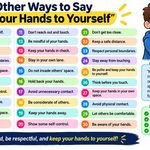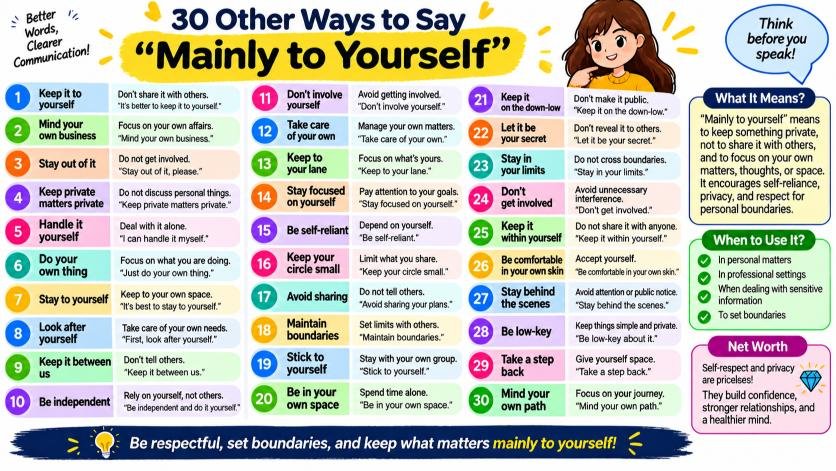
Have you ever wanted to tell someone to keep their hands to themselves but struggled to find the right words? For you are dealing with unwanted touching, teaching children about personal boundaries, or trying to communicate respectfully, choosing the right expression can make a big difference. The phrase “keep your hands to yourself” is clear and direct, but it may sound too strict in certain situations. Fortunately, there are many alternative ways to express the same message, ranging from polite requests to firm statements. Learning these expressions can help you improve your English vocabulary, communicate more naturally, and express your boundaries with greater confidence in everyday interactions.
In this guide, you will discover useful alternatives to “keep your hands to yourself,” complete with explanations and practical examples. From polite expressions such as “please respect my personal space” to direct statements like “please don’t touch me,” these phrases can help you handle different situations appropriately. Each alternative highlights a practical way to communicate personal boundaries while considering tone, context, and clarity. Whether you are an English learner, a student, a professional, or simply looking for better ways to express yourself, this list will help you choose the right words with confidence
Quick Categories: Choose the Right Expression
Formal alternatives to “keep your hands to yourself”
- Please refrain from touching others.
- Respect other people’s physical boundaries.
- Avoid unnecessary physical contact.
- Please obtain consent before touching anyone.
Pro tip: Use respectful, neutral language in schools, public settings, and formal conversations. Focus on the expected behavior rather than criticizing the person.
“Clear boundaries communicate respect without creating unnecessary conflict.”
Casual alternatives
- Please don’t touch me.
- Give me a little space.
- Let’s keep our hands to ourselves.
- Please keep your hands away.
Pro tip: Use a calm voice and simple wording when speaking with friends, family members, or children. Direct language is often easier to understand.
Professional alternatives
- Please respect my personal space.
- Please avoid physical contact.
- Let’s maintain appropriate boundaries.
- Please ask before touching anything.
Pro tip: In workplace communication, describe the specific boundary or action you expect. This keeps your message professional and actionable.
Informal expressions
- Hands off, please.
- Don’t touch that.
- Keep your hands off me.
- No touching, please.
Pro tip: Informal expressions work best in familiar situations. If someone seems uncomfortable or has ignored a boundary, prioritize clarity over humor.
Common Mistakes to Avoid
When learning other ways to say keep your hands to yourself, pay attention to grammar, tone, and context. Here are five common mistakes English learners should avoid.
1. Using overly aggressive language in a polite situation. Incorrect choice: “Get your hands off everything!” Better: “Please avoid touching the items.”
2. Confusing personal space with physical ownership. Incorrect: “Respect my personal space” when asking someone not to handle a particular object. Better: “Please don’t touch my belongings.”
3. Forgetting to use polite wording in professional settings. Incorrect: “Hands off my desk!” Better: “Please ask before handling anything on my desk.”
4. Using an unclear expression. Incorrect: “Be careful with yourself.” Better: “Please avoid touching other people.”
5. Assuming that polite language always communicates a firm boundary. Incorrect: “Maybe you could give me a little room?” when someone repeatedly touches you without permission. Better: “Please stop touching me.”
What Does “Keep Your Hands to Yourself” Mean?
“Keep your hands to yourself” is an English expression that tells someone not to touch other people, interfere physically, or handle things that do not belong to them.
The phrase is particularly common when adults teach children about personal boundaries, but it is also useful among adults.
Grammar explanation: The expression uses the imperative form of the verb keep. The reflexive pronoun yourself refers back to the person receiving the instruction.
Example: “During the school trip, the teacher reminded everyone to keep their hands to themselves.”
Depending on the context, the expression can sound like a friendly reminder, a firm instruction, or a warning.
When to Use “Keep Your Hands to Yourself”
Use this expression when you need to communicate physical boundaries or prevent unwanted touching.
- At school: Reminding children not to push, grab, or touch classmates.
- At home: Teaching siblings to respect one another’s space.
- At work: Preventing unwanted contact or inappropriate handling of colleagues’ belongings.
- In public: Asking someone to stop touching you or your possessions.
- During social interactions: Establishing boundaries with friends or acquaintances.
Spoken vs. written usage
- Spoken English: The expression is natural, direct, and easy to understand.
- Written English: It can appear in classroom rules, signs, behavior policies, or informal messages. More precise wording is often preferable in formal documents.
Formal vs. informal usage
The phrase is suitable for everyday communication, but its tone can sound commanding. Formal alternatives such as “Please refrain from physical contact” may be better in professional or institutional settings.
“The best alternative is not always the most formal one. It is the one that makes your boundary clear to the right audience.”
Is It Professional or Polite to Say “Keep Your Hands to Yourself”?
The expression can be polite when delivered calmly, especially when speaking to children or addressing a clear boundary. However, it may sound stern or patronizing when used with adult colleagues.
Business-style example: “Please respect my personal space and avoid physical contact during meetings.”
- Polite? Yes, when used respectfully and appropriately.
- Professional? Not in most workplace situations; a more specific and neutral phrase is usually preferable.
Professional communication does not require you to soften every boundary. If someone continues unwanted touching after being asked to stop, a direct statement such as “Do not touch me” is appropriate.
Pros and Cons of Using “Keep Your Hands to Yourself”
Pros
- Simple and natural: Easy for native speakers and English learners to understand.
- Friendly tone: Can sound like a gentle reminder when delivered calmly.
- Common usage: Widely recognized in everyday English.
- Easy to understand: Clearly communicates a basic behavioral expectation.
Cons
- Too informal for work: May sound overly familiar in formal professional communication.
- Overused: Repeating the same phrase can make communication less varied.
- Limited emotional range: Does not always explain why the behavior is inappropriate.
- Not suitable for formal writing: More precise language is often needed in policies, reports, and official notices.
Other Ways to Say “Keep Your Hands to Yourself” With Examples
These 30 alternatives will help you sound more fluent, confident, and natural in different situations.
Choose each expression according to tone, context, and audience. The most suitable wording will communicate personal boundaries clearly while maintaining the right level of politeness.
30 alternatives with meanings and examples
1. Please don’t touch me.
Meaning: A polite but direct request to stop physical contact.
Explanation: It clearly communicates that you do not want to be touched.
Example Sentence: “Please don’t touch me while I’m working.”
Best Use: Personal boundaries
Worst Use: General classroom rules
Tone: Direct, polite, firm
Context Variability: Casual: “Please don’t touch me.” Professional: “Please avoid physical contact.” Spoken: “Don’t touch me, please.”
2. Respect my personal space.
Meaning: Give me the physical distance I need to feel comfortable.
Explanation: This phrase focuses on boundaries rather than blaming someone.
Example Sentence: “I’d appreciate it if you would respect my personal space.”
Best Use: Adult interactions
Worst Use: Object handling
Tone: Calm, assertive, respectful
Context Variability: Casual: “Give me some space.” Professional: “Please respect my personal space.” Spoken: “Could you give me a little room?”
3. Keep your hands off me.
Meaning: Do not touch my body.
Explanation: This is a firm instruction for stopping unwanted physical contact.
Example Sentence: “Keep your hands off me. I don’t want to be touched.”
Best Use: Firm boundaries
Worst Use: Gentle reminders
Tone: Strong, direct, serious
Context Variability: Casual: “Don’t touch me.” Professional: “Do not make physical contact with me.” Spoken: “Keep your hands off me.”
4. Please refrain from touching others.
Meaning: Avoid making physical contact with other people.
Explanation: This formal expression is appropriate for rules and public instructions.
Example Sentence: “Visitors are requested to refrain from touching other guests.”
Best Use: Formal notices
Worst Use: Friendly banter
Tone: Formal, neutral, courteous
Context Variability: Casual: “Please don’t touch people.” Professional: “Please refrain from physical contact.” Spoken: “Please avoid touching others.”
5. Don’t touch without permission.
Meaning: Ask for consent before touching someone or something.
Explanation: This phrase establishes permission as the condition for contact.
Example Sentence: “Remember, don’t touch another person’s belongings without permission.”
Best Use: Consent education
Worst Use: Urgent confrontation
Tone: Clear, instructional, firm
Context Variability: Casual: “Ask first.” Professional: “Please obtain permission before handling these items.” Spoken: “Don’t touch it without asking.”
6. Give me a little space.
Meaning: Move away enough to allow me some personal room.
Explanation: This sounds softer than a direct prohibition against touching.
Example Sentence: “Could you give me a little space while I finish this task?”
Best Use: Everyday interactions
Worst Use: Handling objects
Tone: Friendly, gentle, clear
Context Variability: Casual: “Give me some room.” Professional: “I’d appreciate a little more space.” Spoken: “Could you step back a little?”
7. Keep your hands away.
Meaning: Do not move your hands toward a person or object.
Explanation: The expression works best when the object or boundary is already clear.
Example Sentence: “Please keep your hands away from the hot surface.”
Best Use: Safety instructions
Worst Use: Unclear situations
Tone: Cautious, direct, instructional
Context Variability: Casual: “Keep away from that.” Professional: “Please keep your hands clear of the equipment.” Spoken: “Hands away, please.”
8. Let’s keep our hands to ourselves.
Meaning: Everyone should avoid touching other people.
Explanation: The inclusive wording makes this a useful reminder for groups.
Example Sentence: “Before we start the activity, let’s keep our hands to ourselves.”
Best Use: Group reminders
Worst Use: Serious misconduct
Tone: Friendly, inclusive, instructive
Context Variability: Casual: “Let’s not touch each other.” Professional: “Let’s maintain appropriate physical boundaries.” Spoken: “Everyone, hands to yourselves.”
9. Please avoid physical contact.
Meaning: Do not make physical contact with another person.
Explanation: This neutral wording works well in professional and formal environments.
Example Sentence: “Please avoid physical contact during the training session.”
Best Use: Workplace settings
Worst Use: Playful conversations
Tone: Neutral, formal, professional
Context Variability: Casual: “Please don’t touch.” Professional: “Please avoid physical contact.” Spoken: “Let’s avoid physical contact, please.”
10. Let’s maintain appropriate boundaries.
Meaning: Everyone should respect reasonable personal limits.
Explanation: This phrase addresses broader behavior as well as physical contact.
Example Sentence: “Let’s maintain appropriate boundaries when interacting with clients.”
Best Use: Workplace conduct
Worst Use: Immediate danger
Tone: Diplomatic, professional, measured
Context Variability: Casual: “Let’s respect each other’s space.” Professional: “Let’s maintain appropriate boundaries.” Spoken: “We need to respect each other’s boundaries.”
11. Please ask before touching anything.
Meaning: Get permission before handling an object.
Explanation: This phrase is especially useful when protecting personal or shared belongings.
Example Sentence: “Please ask before touching anything on my desk.”
Best Use: Personal belongings
Worst Use: Unwanted touching
Tone: Polite, practical, clear
Context Variability: Casual: “Ask before touching.” Professional: “Please obtain permission before handling equipment.” Spoken: “Could you ask me first?”
12. Hands off, please.
Meaning: Stop touching or handling something.
Explanation: This short expression is effective when the object or action is obvious.
Example Sentence: “Hands off, please. I’m still using that.”
Best Use: Immediate reminders
Worst Use: Formal correspondence
Tone: Direct, casual, firm
Context Variability: Casual: “Hands off!” Professional: “Please do not handle that item.” Spoken: “Hands off, please.”
13. Don’t touch that.
Meaning: Do not make contact with a particular object.
Explanation: This simple instruction works well when preventing unwanted handling or injury.
Example Sentence: “Don’t touch that wire; it may be dangerous.”
Best Use: Safety warnings
Worst Use: General boundaries
Tone: Direct, urgent, clear
Context Variability: Casual: “Leave that alone.” Professional: “Please do not handle the exposed wiring.” Spoken: “Don’t touch that!”
14. Please keep your distance.
Meaning: Stay far enough away to respect someone’s comfort or safety.
Explanation: It emphasizes physical distance rather than touching itself.
Example Sentence: “Please keep your distance while I’m handling the equipment.”
Best Use: Safety situations
Worst Use: Close teamwork
Tone: Firm, neutral, cautious
Context Variability: Casual: “Stay back a little.” Professional: “Please maintain a safe distance.” Spoken: “Please stand a little farther away.”
15. Stop touching other people.
Meaning: Immediately stop making unwanted physical contact with others.
Explanation: This is a straightforward instruction for repeated or inappropriate touching.
Example Sentence: “Stop touching other people when they ask you not to.”
Best Use: Correcting behavior
Worst Use: Gentle introductions
Tone: Firm, serious, direct
Context Variability: Casual: “Stop touching them.” Professional: “Please discontinue unwanted physical contact.” Spoken: “Stop touching people.”
16. Keep your hands to your own belongings.
Meaning: Handle only your own possessions unless you have permission.
Explanation: This adapted expression focuses specifically on ownership and property.
Example Sentence: “During the activity, keep your hands to your own belongings.”
Best Use: Shared spaces
Worst Use: Personal contact
Tone: Instructional, clear, firm
Context Variability: Casual: “Stick to your own things.” Professional: “Please handle only your assigned materials.” Spoken: “Leave everyone else’s things alone.”
17. Please don’t grab me.
Meaning: Do not seize or hold my body or clothing.
Explanation: This phrase is more specific than a general request not to touch.
Example Sentence: “Please don’t grab me when you need my attention.”
Best Use: Unwanted grabbing
Worst Use: Formal policies
Tone: Direct, personal, assertive
Context Variability: Casual: “Don’t grab me.” Professional: “Please get my attention without physical contact.” Spoken: “Please don’t grab my arm.”
18. Keep your hands where I can see them.
Meaning: Keep your hands visible instead of moving them out of sight.
Explanation: This is a context-specific instruction used when visibility matters for safety or security.
Example Sentence: “During the safety demonstration, keep your hands where I can see them.”
Best Use: Safety procedures
Worst Use: Ordinary conversations
Tone: Commanding, cautious, authoritative
Context Variability: Casual: “Keep your hands visible.” Professional: “Please keep your hands in view during the procedure.” Spoken: “Keep your hands where I can see them.”
19. Please don’t invade my personal space.
Meaning: Do not come so close that I feel uncomfortable.
Explanation: This phrase identifies excessive closeness as the problem.
Example Sentence: “Please don’t invade my personal space when we’re talking.”
Best Use: Close interactions
Worst Use: Handling objects
Tone: Assertive, personal, serious
Context Variability: Casual: “Could you step back?” Professional: “Please maintain a comfortable distance.” Spoken: “You’re standing a little too close.”
20. Keep your hands to yourself and your eyes on your work.
Meaning: Avoid touching others and concentrate on your assigned task.
Explanation: This extended instruction combines a physical boundary with a reminder to focus.
Example Sentence: “Everyone, keep your hands to yourself and your eyes on your work during the test.”
Best Use: Classroom management
Worst Use: Adult meetings
Tone: Authoritative, instructional, firm
Context Variability: Casual: “Focus on your own work.” Professional: “Please focus on your assigned task and respect others’ boundaries.” Spoken: “Hands to yourself and eyes on your paper.”
21. Please respect my boundaries.
Meaning: Honor the personal limits I have communicated.
Explanation: This expression can address physical contact and other forms of unwanted behavior.
Example Sentence: “I’ve explained that I don’t like being touched, so please respect my boundaries.”
Best Use: Personal relationships
Worst Use: Object labels
Tone: Respectful, assertive, composed
Context Variability: Casual: “Please respect my limits.” Professional: “Please respect my stated boundaries.” Spoken: “I need you to respect my boundaries.”
22. No touching, please.
Meaning: Do not touch the person or object in question.
Explanation: This brief expression works well for signs, activities, and simple reminders.
Example Sentence: “No touching, please. The artwork is fragile.”
Best Use: Public signs
Worst Use: Detailed explanations
Tone: Simple, polite, firm
Context Variability: Casual: “Don’t touch that.” Professional: “Please do not touch the displayed items.” Spoken: “No touching, please.”
23. Please stop reaching for me.
Meaning: Stop extending your hands toward my body.
Explanation: This phrase identifies the unwanted movement rather than only the contact.
Example Sentence: “Please stop reaching for me while I’m speaking.”
Best Use: Unwanted contact
Worst Use: General rules
Tone: Direct, assertive, serious
Context Variability: Casual: “Stop reaching for me.” Professional: “Please avoid reaching toward me.” Spoken: “Please stop reaching out to touch me.”
24. Keep your hands to yourself around others.
Meaning: Avoid touching other people during social interactions.
Explanation: Adding “around others” clarifies the setting in which the behavior is expected.
Example Sentence: “Remember to keep your hands to yourself around others at the community center.”
Best Use: Social settings
Worst Use: Object handling
Tone: Educational, calm, instructive
Context Variability: Casual: “Don’t touch people.” Professional: “Maintain appropriate physical boundaries with others.” Spoken: “Keep your hands to yourself around everyone.”
25. Please handle your own things.
Meaning: Touch or manage only your own possessions.
Explanation: This is a practical alternative when someone is interfering with another person’s belongings.
Example Sentence: “Please handle your own things and leave my bag alone.”
Best Use: Shared belongings
Worst Use: Personal contact
Tone: Direct, practical, firm
Context Variability: Casual: “Stick to your own stuff.” Professional: “Please handle your assigned materials only.” Spoken: “Please leave my things alone.”
26. Don’t cross physical boundaries.
Meaning: Do not disregard another person’s limits regarding physical contact or distance.
Explanation: This expression is useful when discussing respectful conduct more broadly.
Example Sentence: “Team members must not cross physical boundaries during workplace interactions.”
Best Use: Conduct policies
Worst Use: Young children
Tone: Formal, serious, precise
Context Variability: Casual: “Don’t get in my space.” Professional: “Do not cross established physical boundaries.” Spoken: “Please respect my physical boundaries.”
27. Please step back.
Meaning: Move backward to increase the distance between us.
Explanation: This short request communicates an immediate need for space.
Example Sentence: “Please step back while I open the door.”
Best Use: Immediate distance
Worst Use: Long-term rules
Tone: Direct, calm, practical
Context Variability: Casual: “Move back a little.” Professional: “Please step back to allow sufficient space.” Spoken: “Could you step back, please?”
28. Don’t put your hands on others.
Meaning: Do not touch or physically handle other people.
Explanation: This direct expression is especially useful when addressing unwanted contact.
Example Sentence: “Don’t put your hands on others, even when you’re joking.”
Best Use: Behavior correction
Worst Use: Friendly greetings
Tone: Firm, cautionary, clear
Context Variability: Casual: “Don’t touch people.” Professional: “Avoid unwanted physical contact.” Spoken: “Don’t put your hands on anyone.”
29. Please get my attention without touching me.
Meaning: Use words or another appropriate method instead of physical contact.
Explanation: This alternative tells someone what to do instead of simply prohibiting touching.
Example Sentence: “Please get my attention without touching me while I’m presenting.”
Best Use: Workplace communication
Worst Use: Immediate physical danger
Tone: Constructive, polite, assertive
Context Variability: Casual: “Just call my name.” Professional: “Please address me verbally rather than using physical contact.” Spoken: “Just say my name instead of touching me.”
30. Do not touch anyone without their consent.
Meaning: Never touch another person without their permission.
Explanation: This explicit statement emphasizes consent and personal autonomy.
Example Sentence: “Our classroom rule is simple: do not touch anyone without their consent.”
Best Use: Consent education
Worst Use: Casual greetings
Tone: Firm, educational, respectful
Context Variability: Casual: “Ask before touching someone.” Professional: “Obtain consent before initiating physical contact.” Spoken: “Don’t touch anyone unless they agree.”
Scroll-Stopping Highlights
“A clear boundary is more effective than an unclear hint.”
“Politeness does not mean giving up your right to personal space.”
“Choose direct language for safety and diplomatic language for routine professional communication.”
“Respectful English combines the right words, the right tone, and the right context.”
Mini Quiz: Test Your Understanding
Check your answers to see whether you can select the most appropriate expression for different situations.
1. A colleague keeps touching your shoulder during meetings. What is the best professional response?
Hands off, buddy!
Please avoid physical contact during meetings.
Keep your hands where I can see them.
2. You want to teach a group of children not to touch their classmates. Which phrase works best?
Let’s keep our hands to ourselves.
Please refrain from physical contact pursuant to policy.
Don’t invade my personal space.
3. Someone reaches toward a dangerous electrical wire. What should you say?
Let’s maintain appropriate boundaries.
Please respect my personal space.
Don’t touch that!
4. Someone handles your belongings without permission. Which phrase is most precise?
Please ask before touching anything.
Please step back.
Let’s keep our hands to ourselves.
Score: 0 of 4
Reset quiz
Comparison Table: Top 10 Alternatives
Use this table to quickly select the right expression for your situation.
| Phrase | Tone | Best Use |
| Please don’t touch me. | Direct, polite | Personal boundaries |
| Respect my personal space. | Calm, assertive | Adult interactions |
| Keep your hands off me. | Strong, firm | Unwanted contact |
| Please refrain from touching others. | Formal, neutral | Official instructions |
| Don’t touch without permission. | Clear, instructional | Consent education |
| Give me a little space. | Friendly, gentle | Casual conversations |
| Please avoid physical contact. | Professional, neutral | Workplace settings |
| Hands off, please. | Direct, casual | Immediate reminders |
| Please respect my boundaries. | Assertive, respectful | Personal relationships |
| Please get my attention without touching me. | Constructive, polite | Professional communication |
FAQs
1. What are the best alternatives to “keep your hands to yourself”?
Some of the best alternatives are “Please don’t touch me,” “Respect my personal space,” “Please avoid physical contact,” and “Don’t touch without permission.” Choose the expression that fits your situation and desired tone.
2. How do you politely tell someone to keep their hands to themselves?
Say, “Please don’t touch me,” or “I’d appreciate it if you respected my personal space.” Both communicate a clear boundary without unnecessary hostility.
3. What is a professional way to say “keep your hands to yourself”?
“Please avoid physical contact” is a neutral professional alternative. If the issue concerns belongings, use “Please ask before handling my things.”
4. Is “keep your hands to yourself” rude?
Not necessarily. It is a common, understandable expression, but it can sound stern or commanding depending on your tone, relationship, and circumstances.
5. What is the difference between “keep your hands to yourself” and “respect my personal space”?
“Keep your hands to yourself” directly discourages touching. “Respect my personal space” emphasizes a person’s comfort and physical boundaries, including the distance they prefer.
See Also
Continue improving your English with these related learning resources:
- See also: [Other Ways to Say “Mind Your Own Business”] for alternative expressions to communicate boundaries and privacy.
- See also: [Professional English: How to Communicate Assertively at Work] for practical phrases that help you express expectations politely and confidently.
Conclusion
Learning other ways to say keep your hands to yourself gives you more control over how you communicate personal boundaries. Whether you are speaking with children, friends, colleagues, or strangers, the right expression helps you sound clear, confident, and respectful. Formal alternatives suit professional settings, while simple and direct expressions are often more effective in everyday conversations.
Make daily practice part of your English-learning routine. Choose three phrases from this list, create your own example sentences, and practice saying them aloud. Pay attention to tone, context, and the relationship between speakers. With consistent practice, you will become more comfortable choosing language that protects personal boundaries while maintaining effective communication.