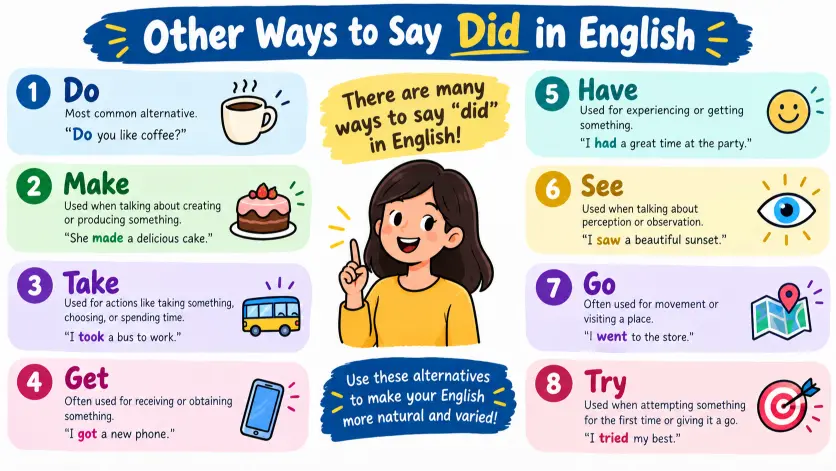
Have you ever used “did” repeatedly and wondered whether there is a more natural or precise way to express the same idea? While “did” is one of the most common words in English, relying on it too often can make your conversations and writing sound repetitive. The good news is that English offers many alternatives depending on the situation, tone, and meaning you want to communicate.
In this guide, we’ll explore 20+ other ways to say “did” with clear meanings, practical examples, and usage tips. fo you are an English learner, a professional, a student, or simply trying to make your everyday communication more fluent, these alternatives can help you choose words that fit the context better. From casual conversations to formal writing, understanding these expressions can improve both your vocabulary and confidence. Each alternative is explained in a straightforward, educational way so you can understand
Quick Categories
Formal Alternatives to “Did”
- Performed
- Conducted
- Executed
- Carried out
Pro Tip: Use precise action verbs in reports, academic writing, and formal correspondence.
Casual Alternatives
- Handled
- Made
- Took care of
- Worked on
Pro Tip: Choose natural verbs that sound conversational without becoming overly informal.
Professional Alternatives
- Completed
- Accomplished
- Managed
- Implemented
Pro Tip: In professional communication, select a verb that shows exactly what you achieved.
Informal Expressions
- Got done
- Took care of
- Worked through
- Dealt with
Pro Tip: These informal expressions in English work well in friendly conversations but may need replacing in formal documents.
Specific verbs show your audience exactly what happened instead of making them guess.
Common Mistakes
1. Using “Did” When a More Precise Verb Is Needed
Mistake: I did the project successfully.
Better: I completed the project successfully.
2. Using “Did” for a Formal Procedure
Mistake: The researcher did an experiment.
Better: The researcher conducted an experiment.
3. Using an Informal Expression in a Formal Email
Mistake: I got the report done.
Better: I completed the report.
4. Choosing a Synonym That Changes the Meaning
Mistake: I performed my homework.
Better: I completed my homework.
5. Replacing “Did” Without Considering Context
Mistake: She executed her homework.
Better: She completed her homework.
What Does “Did” Mean?
Did is the simple past form of do. It can describe an action, activity, task, responsibility, or event that happened in the past.
It can also work as an auxiliary verb in questions and negative sentences.
Example: She did her assignment yesterday.
As an auxiliary verb:
Question: Did you finish the report?
Negative: I did not finish the report.
The appropriate replacement depends on whether did is being used as a main verb or as an auxiliary verb.
When to Use “Did”
Use did when:
- Talking about a completed past action
- Describing general past activities
- Asking questions about past actions
- Forming negative past-tense sentences
- Speaking naturally in everyday conversations
- Writing when a simple verb is sufficient
Spoken vs. Written
Spoken English: I did everything you asked.
Written English: I completed all the requested tasks.
Formal vs. Informal
Informal: I did the work yesterday.
Professional: I completed the assigned work yesterday.
Formal: I carried out the required procedures yesterday.
Is It Professional or Polite to Say “Did”?
Politeness: Yes. The word itself is not rude or impolite.
Professionalism: Usually yes, but it can be too general when a more specific verb would make your communication clearer.
Business-style example:
I completed the analysis and submitted the report before the deadline.
Polite? ✔️ Yes
Professional? ❌ No, not in most achievement-focused contexts when a more precise verb would be better.
Professional English is often about precision, not simply using bigger words.
Pros and Cons of Using “Did”
Pros
- Simple and natural: Easy to use correctly.
- Friendly tone: Works naturally in everyday conversation.
- Common usage: Native speakers use it constantly.
- Easy to understand: Its meaning is usually immediately clear.
Cons
- Too informal for some work contexts: It may lack professional precision.
- Overused: Repetition can make writing sound basic.
- Limited emotional range: It does not always show achievement or effort.
- Not suitable for formal writing: More specific verbs may communicate the action better.
Other Ways to Say “Did” With Examples
These alternatives will help you sound more fluent, confident, and natural in different situations.
Use them according to tone, context, and audience to describe achievement, action, responsibility, or completion.
1. Phrase: Completed
- Meaning: Finished something that needed to be done.
- Explanation: This emphasizes successful completion.
- Example Sentence: I completed the report before the deadline.
- Best Use: Tasks and assignments
- Worst Use: Ongoing activities
- Tone: Clear, professional
- Context Variability: casual: completed the task; professional: completed the report; spoken: I completed it.
2. Phrase: Performed
- Meaning: Carried out an action, procedure, or duty.
- Explanation: It is especially useful for professional or technical activities.
- Example Sentence: The technician performed a safety inspection.
- Best Use: Procedures and duties
- Worst Use: Simple chores
- Tone: Formal, precise
- Context Variability: casual: performed the task; professional: performed an inspection; spoken: performed the procedure.
3. Phrase: Accomplished
- Meaning: Successfully achieved something.
- Explanation: It highlights a positive result.
- Example Sentence: She accomplished everything she planned to do.
- Best Use: Achievements
- Worst Use: Minor actions
- Tone: Positive, confident
- Context Variability: casual: accomplished a goal; professional: accomplished key objectives; spoken: I accomplished it.
4. Phrase: Carried Out
- Meaning: Completed or conducted a planned action.
- Explanation: It is common in formal and professional English.
- Example Sentence: The team carried out a detailed review.
- Best Use: Formal tasks
- Worst Use: Casual chores
- Tone: Formal, precise
- Context Variability: casual: carried out the plan; professional: carried out an investigation; spoken: we carried it out.
5. Phrase: Conducted
- Meaning: Organized or performed an activity.
- Explanation: It commonly describes research, interviews, surveys, or investigations.
- Example Sentence: The company conducted a customer survey.
- Best Use: Research activities
- Worst Use: Household tasks
- Tone: Academic, professional
- Context Variability: casual: conducted a discussion; professional: conducted research; spoken: we conducted an interview.
6. Phrase: Executed
- Meaning: Put a plan, task, or strategy into action.
- Explanation: It emphasizes effective implementation.
- Example Sentence: The marketing team executed the campaign successfully.
- Best Use: Plans and strategies
- Worst Use: Simple errands
- Tone: Professional, assertive
- Context Variability: casual: executed the plan; professional: executed the strategy; spoken: we executed it.
7. Phrase: Handled
- Meaning: Managed or dealt with something.
- Explanation: It emphasizes responsibility and control.
- Example Sentence: Maria handled the customer complaint professionally.
- Best Use: Problems and duties
- Worst Use: Academic research
- Tone: Natural, professional
- Context Variability: casual: handled the problem; professional: handled the complaint; spoken: I handled it.
8. Phrase: Managed
- Meaning: Successfully dealt with or controlled something.
- Explanation: It highlights responsibility and organization.
- Example Sentence: He managed the project efficiently.
- Best Use: Responsibilities
- Worst Use: Tiny actions
- Tone: Professional, confident
- Context Variability: casual: managed the task; professional: managed the project; spoken: I managed everything.
9. Phrase: Accomplished the Task
- Meaning: Successfully finished an assigned activity.
- Explanation: This phrase focuses on the result.
- Example Sentence: The team accomplished the task ahead of schedule.
- Best Use: Work achievements
- Worst Use: Casual questions
- Tone: Positive, formal
- Context Variability: casual: accomplished the task; professional: accomplished the objective; spoken: we accomplished it.
10. Phrase: Completed the Work
- Meaning: Finished required work.
- Explanation: It provides more detail than the general verb.
- Example Sentence: I completed the work before leaving the office.
- Best Use: Workplace tasks
- Worst Use: Future actions
- Tone: Clear, professional
- Context Variability: casual: completed the work; professional: completed assigned work; spoken: I completed it.
11. Phrase: Took Care Of
- Meaning: Dealt with or completed something.
- Explanation: It is natural in everyday and workplace conversations.
- Example Sentence: I took care of the customer request.
- Best Use: Everyday duties
- Worst Use: Academic papers
- Tone: Casual, helpful
- Context Variability: casual: took care of it; professional: took care of the request; spoken: I took care of everything.
12. Phrase: Worked On
- Meaning: Spent time developing or completing something.
- Explanation: It does not necessarily mean the work was finished.
- Example Sentence: I worked on the presentation all afternoon.
- Best Use: Ongoing projects
- Worst Use: Finished results
- Tone: Neutral, natural
- Context Variability: casual: worked on it; professional: worked on the proposal; spoken: I worked on that.
13. Phrase: Achieved
- Meaning: Successfully reached a desired result.
- Explanation: It focuses on an outcome rather than the action itself.
- Example Sentence: The team achieved its quarterly target.
- Best Use: Goals and results
- Worst Use: Simple chores
- Tone: Professional, positive
- Context Variability: casual: achieved the goal; professional: achieved the target; spoken: we achieved it.
14. Phrase: Completed Successfully
- Meaning: Finished something with a successful outcome.
- Explanation: It emphasizes both completion and success.
- Example Sentence: The engineers completed the installation successfully.
- Best Use: Professional results
- Worst Use: Simple actions
- Tone: Formal, confident
- Context Variability: casual: completed successfully; professional: successfully completed the installation; spoken: we completed it successfully.
15. Phrase: Accomplished the Goal
- Meaning: Successfully reached an intended objective.
- Explanation: It clearly communicates achievement.
- Example Sentence: We accomplished our goal within three months.
- Best Use: Objectives
- Worst Use: Minor tasks
- Tone: Motivational, professional
- Context Variability: casual: accomplished the goal; professional: accomplished the business objective; spoken: we accomplished it.
16. Phrase: Undertook
- Meaning: Accepted responsibility for a task or activity.
- Explanation: It emphasizes taking on an assignment.
- Example Sentence: She undertook a major research project.
- Best Use: Major projects
- Worst Use: Everyday chores
- Tone: Formal, academic
- Context Variability: casual: undertook the task; professional: undertook the project; spoken: she undertook the assignment.
17. Phrase: Addressed
- Meaning: Dealt with a problem, issue, or concern.
- Explanation: It is useful when showing that an issue received attention.
- Example Sentence: The manager addressed the customer’s concerns.
- Best Use: Problems and concerns
- Worst Use: Physical tasks
- Tone: Professional, direct
- Context Variability: casual: addressed the issue; professional: addressed the concern; spoken: we addressed it.
18. Phrase: Completed the Assignment
- Meaning: Finished an assigned piece of work.
- Explanation: It provides a specific replacement for a vague action.
- Example Sentence: The student completed the assignment on time.
- Best Use: Schoolwork
- Worst Use: Workplace strategy
- Tone: Educational, clear
- Context Variability: casual: completed the assignment; professional: completed the assigned task; spoken: I completed it.
19. Phrase: Implemented
- Meaning: Put a plan, policy, or system into operation.
- Explanation: It is especially useful in professional contexts.
- Example Sentence: The company implemented a new training program.
- Best Use: Plans and policies
- Worst Use: Personal chores
- Tone: Formal, professional
- Context Variability: casual: implemented the idea; professional: implemented the policy; spoken: we implemented it.
20. Phrase: Delivered
- Meaning: Successfully provided or presented something.
- Explanation: It can describe presentations, results, services, or outcomes.
- Example Sentence: She delivered an excellent presentation.
- Best Use: Presentations and results
- Worst Use: Household tasks
- Tone: Professional, confident
- Context Variability: casual: delivered the presentation; professional: delivered the results; spoken: I delivered it.
21. Phrase: Produced
- Meaning: Created or generated something.
- Explanation: It is more precise when the action results in an output.
- Example Sentence: The team produced a detailed report.
- Best Use: Created outputs
- Worst Use: Personal errands
- Tone: Professional, objective
- Context Variability: casual: produced the document; professional: produced the report; spoken: we produced it.
22. Phrase: Created
- Meaning: Made something new.
- Explanation: Use it when the action involves producing an original result.
- Example Sentence: She created a new presentation for the meeting.
- Best Use: New materials
- Worst Use: Routine procedures
- Tone: Neutral, creative
- Context Variability: casual: created a design; professional: created a proposal; spoken: I created it.
23. Phrase: Prepared
- Meaning: Made something ready for use or presentation.
- Explanation: It is useful for documents, meals, presentations, and plans.
- Example Sentence: I prepared the documents for the meeting.
- Best Use: Documents and plans
- Worst Use: Completed outcomes
- Tone: Neutral, professional
- Context Variability: casual: prepared the meal; professional: prepared the documents; spoken: I prepared everything.
24. Phrase: Developed
- Meaning: Created or improved something over time.
- Explanation: It emphasizes growth, planning, or refinement.
- Example Sentence: The team developed a new business strategy.
- Best Use: Ideas and strategies
- Worst Use: Simple errands
- Tone: Professional, polished
- Context Variability: casual: developed an idea; professional: developed a strategy; spoken: we developed it.
25. Phrase: Completed Successfully
- Meaning: Finished an activity with the intended result.
- Explanation: It is useful when the successful outcome matters.
- Example Sentence: The project was completed successfully ahead of schedule.
- Best Use: Project outcomes
- Worst Use: Simple actions
- Tone: Formal, positive
- Context Variability: casual: completed successfully; professional: project completed successfully; spoken: it was completed successfully.
26. Phrase: Resolved
- Meaning: Successfully solved a problem or issue.
- Explanation: Use it when the action involves finding a solution.
- Example Sentence: The support team resolved the technical issue quickly.
- Best Use: Problems and issues
- Worst Use: Creative activities
- Tone: Professional, decisive
- Context Variability: casual: resolved the problem; professional: resolved the complaint; spoken: we resolved it.
27. Phrase: Finished
- Meaning: Brought an activity to an end.
- Explanation: It is a simple and natural alternative when completion is the focus.
- Example Sentence: I finished the report before lunch.
- Best Use: Completed tasks
- Worst Use: Ongoing work
- Tone: Simple, natural
- Context Variability: casual: finished the task; professional: finished the report; spoken: I finished it.
28. Phrase: Carried Through
- Meaning: Continued an action until it was completed.
- Explanation: It emphasizes persistence and completion.
- Example Sentence: She carried the plan through despite several challenges.
- Best Use: Difficult plans
- Worst Use: Small tasks
- Tone: Determined, natural
- Context Variability: casual: carried it through; professional: carried the strategy through; spoken: we carried it through.
29. Phrase: Dealt With
- Meaning: Managed or handled a situation.
- Explanation: It is particularly useful for problems, situations, or responsibilities.
- Example Sentence: The supervisor dealt with the issue promptly.
- Best Use: Problems and situations
- Worst Use: Academic achievements
- Tone: Neutral, practical
- Context Variability: casual: dealt with it; professional: dealt with the complaint; spoken: I dealt with it.
30. Phrase: Made Progress On
- Meaning: Moved forward with a task or project.
- Explanation: It shows progress without claiming complete completion.
- Example Sentence: We made significant progress on the project.
- Best Use: Ongoing projects
- Worst Use: Finished tasks
- Tone: Positive, professional
- Context Variability: casual: made progress on it; professional: made progress on the project; spoken: we made progress.
Fluency grows when you learn which verb expresses the exact action, not just a possible replacement.
See Also
- Other Ways to Say Thank You: Learn natural alternatives for expressing appreciation in everyday and professional situations.
- Professional English Guide: Build stronger workplace vocabulary for emails, meetings, presentations, and formal communication.
Mini Quiz: Test Yourself
1. Which option sounds most appropriate in a formal research report?
A. Did a survey
B. Got a survey done
C. Conducted a survey
D. Made a survey
Answer: C. Conducted a survey
2. Which phrase best describes successfully reaching a business target?
A. Worked on
B. Achieved
C. Did
D. Handled
Answer: B. Achieved
3. Your colleague asks whether you handled a customer issue. Which sounds natural?
A. I conducted it.
B. I performed it.
C. I took care of it.
D. I produced it.
Answer: C. I took care of it
4. Which sentence correctly describes unfinished work?
A. I completed the report.
B. I worked on the report.
C. I accomplished the report.
D. I executed the homework.
Answer: B. I worked on the report.
Comparison Table: Top Alternatives
| Phrase | Tone | Best Use |
| Completed | Professional | Tasks |
| Performed | Formal | Procedures |
| Accomplished | Positive | Achievements |
| Conducted | Formal | Research |
| Carried out | Formal | Activities |
| Executed | Professional | Strategies |
| Handled | Natural | Problems |
| Managed | Professional | Responsibilities |
| Achieved | Positive | Goals |
| Resolved | Professional | Issues |
FAQs
What are the best alternatives to “did”?
The best choice depends on context. Completed, performed, accomplished, conducted, handled, managed, and achieved are useful options.
Is “did” formal English?
Yes, did is grammatically correct in formal English. However, a more specific verb can make professional or academic writing clearer.
What is a professional way to say “did”?
Professional options include completed, performed, conducted, carried out, implemented, managed, and executed, depending on the action.
Can I use “completed” instead of “did”?
Sometimes. Completed specifically means that an activity was finished, while did has a much broader meaning.
How can learning other ways to say “did” improve my English?
Using precise verbs expands your vocabulary, reduces repetition, and helps you choose appropriate professional reaction phrases and expressions for different situations.
Conclusion
Learning different ways to describe past actions gives you greater control over your English. Instead of relying on one general verb, you can choose words such as completed, performed, conducted, managed, achieved, or resolved to communicate exactly what happened.
The key is to practice these alternatives in realistic sentences. Pay attention to whether you are speaking casually, writing professionally, describing an achievement, or explaining a completed task. With regular practice and better tone awareness, your English can become more precise, natural, and confident.









